Overview
Gabion mattresses are commonly supplied in three thicknesses: 170 mm, 230 mm and 300 mm. They look similar in product photographs, and the difference may seem small when reading a quotation.
On site, however, a few centimetres can change the amount of stone required, the depth of the protective layer and the way the mattress is installed.
For buyers comparing Reno mattress specifications, thickness is worth checking before discussing wire diameter or price.
Gabion mattresses are commonly supplied in three thicknesses: 170 mm, 230 mm and 300 mm. They look similar in product photographs, and the difference may seem small when reading a quotation.
What Does Gabion Mattress Thickness Mean?
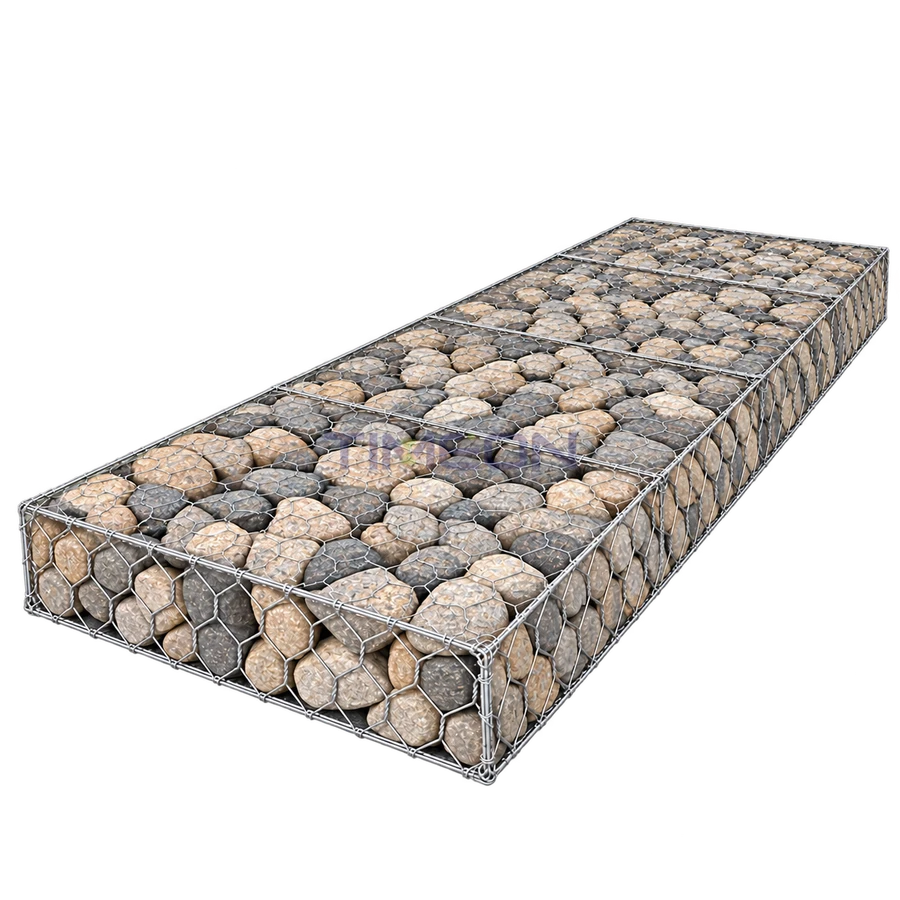
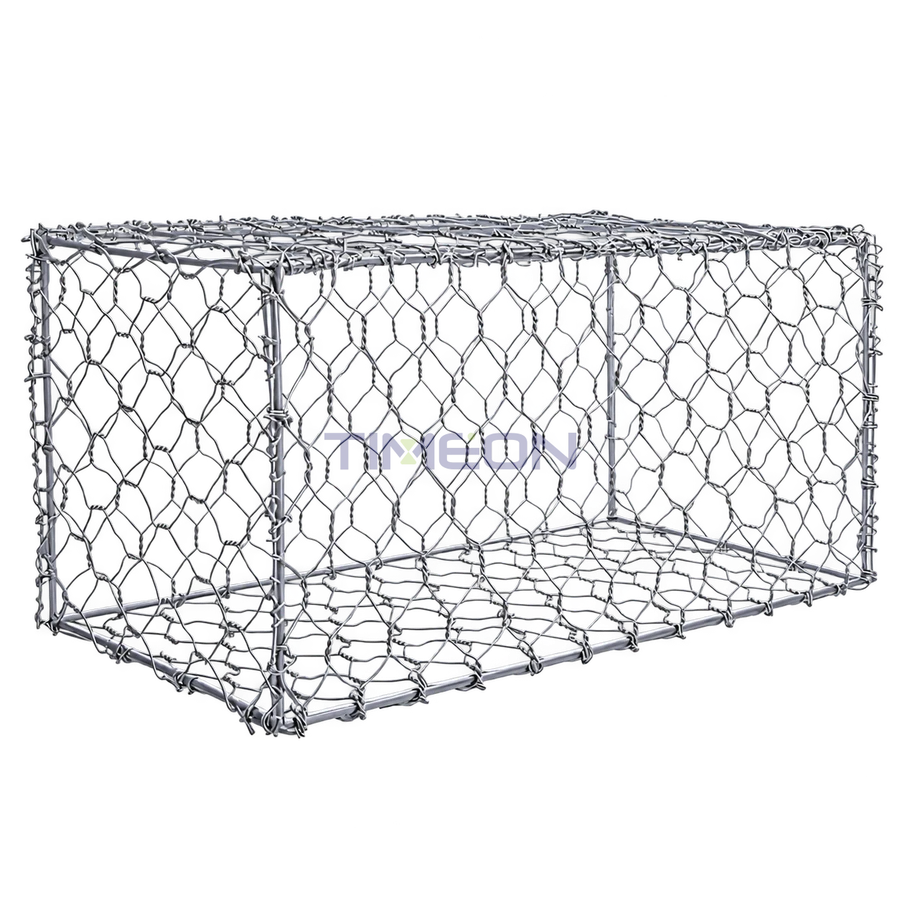
A gabion mattress is a shallow, rectangular wire mesh container divided into compartments. The units are assembled, placed on a prepared surface, filled with stone and closed with a mesh lid.
Unlike a conventional gabion box, which is often used to build retaining structures, a mattress spreads across a larger area with relatively little height.
It is commonly used for:
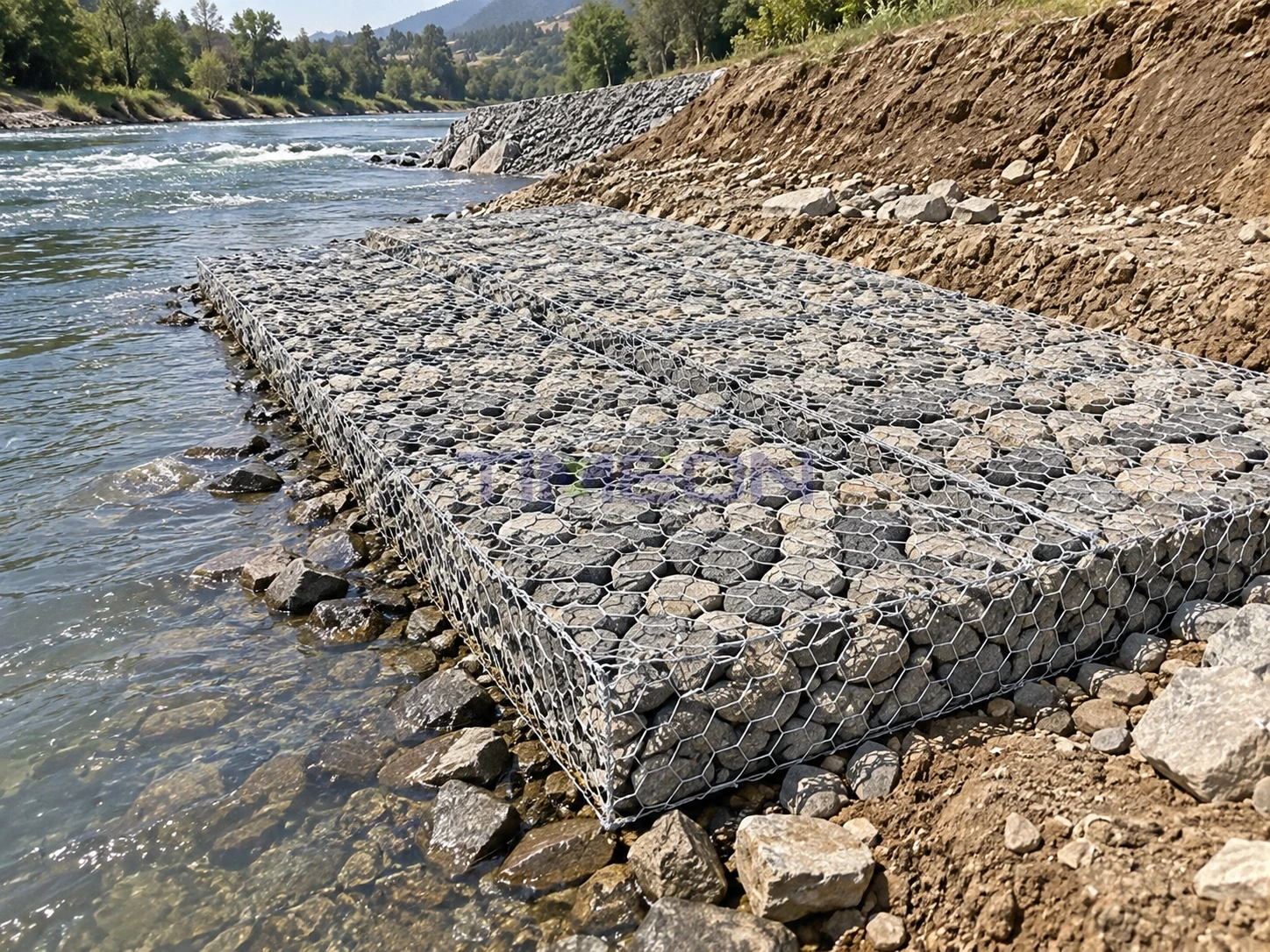
- Riverbed and channel protection
- Riverbank and slope erosion control
- Drainage channel lining
- Scour protection near culverts and bridges
The specified thickness is the nominal height of the assembled unit. It is not the wire diameter, mesh opening or thickness of the wire coating.
These are separate specifications.
170 mm, 230 mm and 300 mm: What's the Difference?
The three dimensions are widely found in commercial gabion mattress ranges, although available sizes depend on the manufacturer and project requirements.
| Thickness | General characteristics |
|---|---|
| 170 mm | Shallow profile with relatively low stone volume |
| 230 mm | Intermediate depth between the thinner and heavier options |
| 300 mm | Deeper stone layer with greater fill volume |
A 170 mm mattress should not automatically be considered suitable for slow-moving water, nor should a 300 mm mattress be selected simply because the flow looks strong.
Water velocity, hydraulic shear stress, channel geometry, stone grading and the underlying soil all affect the design.
For a project with engineering drawings, the mattress thickness should follow the approved specification rather than a general supplier recommendation.
How Much Stone Does Each Thickness Need?
This is one of the more practical differences for procurement.
Consider a gabion mattress measuring 6 m long and 2 m wide. Its nominal geometric volume changes as follows:
| Mattress size | Nominal volume |
|---|---|
| 6 × 2 × 0.17 m | 2.04 m³ |
| 6 × 2 × 0.23 m | 2.76 m³ |
| 6 × 2 × 0.30 m | 3.60 m³ |
The difference between a 170 mm and a 300 mm mattress is 1.56 m³ per unit.
For a large riverbank project, this can make a noticeable difference to stone procurement, transport and handling.
These figures are geometric volumes, not exact stone quantities or weights. Actual requirements depend on the approved fill specification, stone packing, construction details and site allowances.
The wire mesh itself is usually delivered flat-packed. The stone is generally supplied separately, often from a quarry closer to the project.
This means the lowest-priced wire mattress is not necessarily the lowest-cost installed solution.
Stone Size Matters Too
A mattress must hold its stone filling securely while allowing water to pass through the completed structure.
Using stone that is too small can create a risk of material escaping through the mesh or being displaced. Oversized stones can make shallow compartments difficult to fill evenly and may interfere with closing the lid.
For example, 60 × 80 mm double-twisted hexagonal mesh is found in some commercial mattress specifications, but the appropriate rock grading still depends on the product and engineering requirements.
Stone should also be sufficiently durable for its environment. Material that breaks down under repeated wetting, weathering or abrasion may reduce the performance of the protection layer.
Before ordering, it is useful to check the available local stone sizes against the specified mattress thickness and mesh opening.
This is especially important when the mesh is purchased internationally but the fill material is sourced locally.
Don't Overlook the Ground Beneath the Mattress
A gabion mattress protects the surface, but it does not automatically prevent fine soil from being washed away underneath.
In many channel and riverbank installations, a geotextile filter or properly designed granular filter is placed beneath the stone-filled units. Its purpose is to help retain the underlying soil while allowing drainage.
The edges also matter.
If water can flow beneath an unprotected edge, erosion may continue underneath a mattress that still appears intact from above. Toe protection, edge termination and connections between adjacent units should therefore be included in the installation design.
These details are not supplied by the wire mesh alone. They belong to the complete erosion-control system.
Wire Diameter, Coating and Compartments
Once the mattress dimensions are confirmed, the next step is checking its construction.
A typical double-twisted mattress specification identifies several different components:
- Mesh wire: Forms the hexagonal openings that contain the stones.
- Selvedge wire: Reinforces the edges of the mesh panels and is commonly thicker than the main mesh wire.
- Lacing wire or fasteners: Connect the panels, close the lid and join neighbouring units.
- Internal diaphragms: Divide longer mattresses into compartments to help control stone movement and maintain the intended shape.
The coating also deserves attention. Zinc-based metallic coatings and additional polymer coatings are available for different exposure conditions.
For projects involving prolonged water exposure, aggressive soil or potentially corrosive water, coating selection should be based on the specified environment and design life.
Simply asking for “galvanized gabion mattress” may not provide enough information for suppliers to quote equivalent products.
Gabion Mattress or Gabion Box?
Although both products contain stone within wire mesh, they are generally used for different purposes.
A gabion mattress is designed to cover and protect a surface. A deeper gabion box provides greater height and mass and is often used in retaining walls, bank stabilization structures and similar applications.
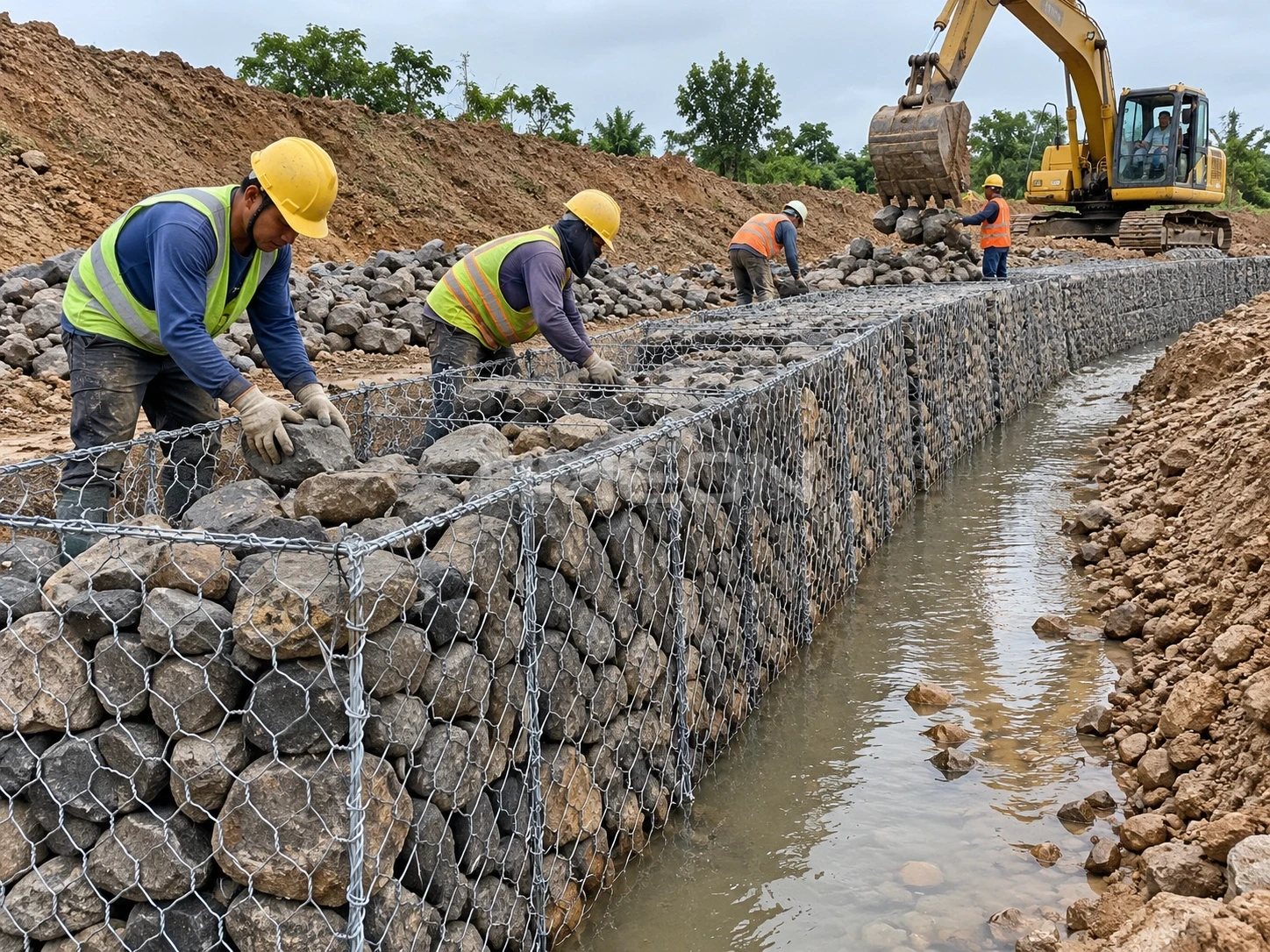
Some projects combine both.
For example, a riverbank design may use gabion boxes where soil retention is needed and gabion mattresses along areas requiring surface erosion protection.
Neither product should be substituted for the other without checking the engineering design.
For the difference between woven and welded gabion baskets, see Gabion Box vs Welded Gabion.
What Should Buyers Confirm Before Ordering?
A useful enquiry includes more than the overall dimensions.
The supplier should be able to identify the mattress length, width and thickness, mesh opening, wire diameters, coating type and internal compartment arrangement.
It is also worth confirming the following:
- Whether dimensions are nominal or subject to stated tolerances
- Whether lids, lacing wire and connecting accessories are included
- Whether the units are supplied flat-packed
- Whether the available stone grading is compatible with the specified mesh and mattress thickness
- Whether the product matches the project's required standard and coating specification
For repeat orders, keeping an approved technical drawing or specification sheet can prevent small differences between shipments.
Final Thoughts
The difference between a 170 mm and a 300 mm gabion mattress is easy to see on a specification sheet. The more important question is what that difference means for the site.
Thickness influences fill volume and installation requirements, but it cannot be selected independently of water conditions, stone size and the underlying ground.
For buyers, a clearly defined specification makes quotations easier to compare and reduces the chance of receiving a mattress that fits the purchase order but not the project.
A few measurements agreed upon before production can save considerably more work during installation.